


Understanding the Comfort of White Noise
Many parents search for simple and natural ways to help their babies sleep more peacefully. One of the most popular solutions today is white noise. Soft and steady background sounds can create a calm atmosphere that helps babies relax, settle faster, and sleep longer. Gentle white noise sounds are designed to mimic comforting environmental sounds that babies often find soothing.
Babies are sensitive to sudden noises around the home. Barking dogs, traffic, television sounds, or conversations can interrupt sleep and make bedtime difficult. White noise helps mask these disturbances by creating a consistent audio background. This steady sound can help babies remain calm during naps and nighttime sleep.
Why Babies Respond Well to White Noise
Before birth, babies spend months inside the womb surrounded by constant sounds. They hear the rhythm of their mother’s heartbeat, blood flow, and soft internal noises throughout the day and night. Because of this, complete silence may actually feel unfamiliar to newborns.
Gentle white noise recreates a similar comforting environment. The soft and repetitive sound helps babies feel secure and relaxed. Many parents notice that their baby falls asleep more quickly when white noise is playing softly in the background.
The calming effect of white noise can also help reduce fussiness during bedtime routines. Instead of becoming overstimulated by changing sounds around the house, babies can focus on a soothing and predictable audio environment.
Benefits of White Noise for Baby Sleep
White noise offers several advantages for both babies and parents. One of the biggest benefits is improved sleep quality. Babies who sleep more soundly often wake less frequently during the night.
Another benefit is faster sleep onset. Some babies struggle to settle down after feeding, diaper changes, or evening activity. White noise creates a peaceful atmosphere that encourages relaxation and sleep readiness.
White noise can also support daytime naps. Household activity during the day often makes naps difficult, especially in busy homes. Gentle background sound helps block interruptions and encourages longer rest periods.
Parents also benefit from a calmer bedtime routine. When babies sleep more peacefully, families often experience less stress and more restful evenings.
Choosing Gentle White Noise Sounds
Not all sound environments are equally relaxing for babies. Gentle white noise is usually softer and smoother than harsh or loud static sounds. Many parents prefer calming audio styles that create a warm and peaceful feeling.
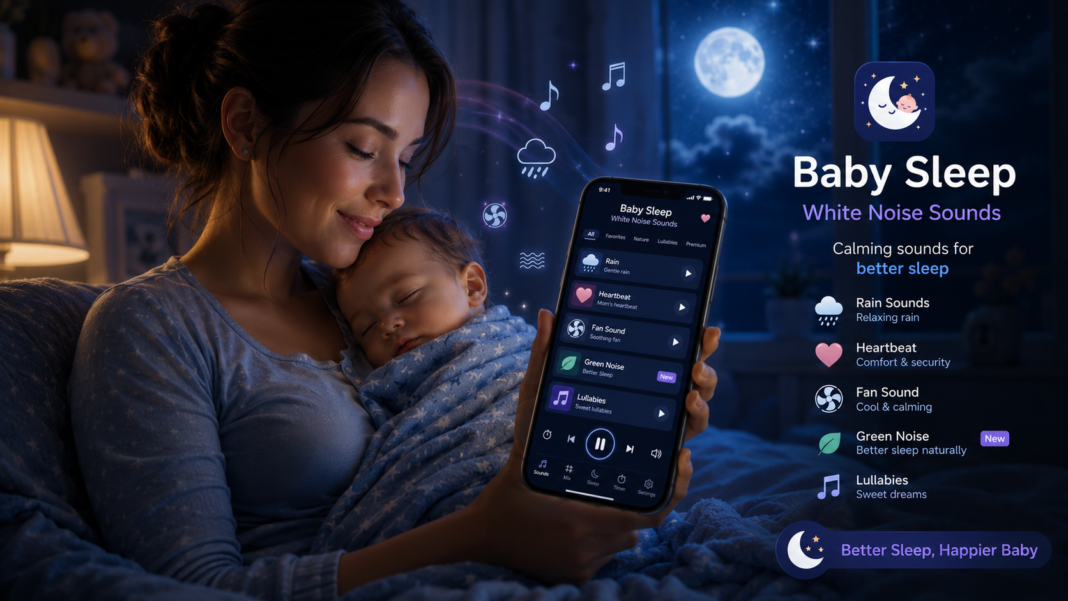
Popular white noise options include soft rainfall, light fan sounds, ocean waves, quiet wind, and low humming sounds. These audio styles provide consistency without becoming overwhelming.
Some families also use nature-inspired sound combinations blended with white noise. Gentle rain mixed with soft airflow can create an especially relaxing sleep atmosphere for infants and toddlers.
The key is maintaining a sound that feels calm, stable, and non-distracting. Sudden changes in volume or dramatic sound effects may interrupt sleep instead of supporting it.
Creating a Relaxing Bedtime Routine
White noise works best when combined with a consistent bedtime routine. Babies often respond positively to predictable sleep habits because routines help signal that it is time to rest.
Parents can begin by dimming lights and reducing stimulation before bedtime. A warm bath, gentle rocking, soft feeding time, or quiet cuddling session can help babies transition into sleep mode.
Once the baby is calm, white noise can be turned on at a comfortable volume. Keeping the sound steady throughout the sleep period may help reduce nighttime wake-ups caused by environmental noise.
Many parents use white noise during both naps and nighttime sleep to create familiarity and consistency. Over time, babies may begin associating the sound with comfort and relaxation.
Safe Use of White Noise for Infants
Safety is important whenever using sound machines or sleep aids for babies. White noise should always be played at a moderate and gentle volume. Extremely loud sound levels may become uncomfortable for sensitive ears.
The sound machine should also be placed at a safe distance from the crib or sleeping area. This helps maintain a soft and balanced listening environment.
Parents should avoid placing speakers directly next to the baby’s head. Instead, the sound should softly fill the room without overpowering the space.
It is also helpful to choose high-quality recordings with smooth and continuous playback. Gentle white noise without sudden interruptions creates the most peaceful sleep environment.
White Noise for Older Babies and Toddlers
White noise is not only useful for newborns. Many older babies and toddlers continue benefiting from calming background sounds during sleep.
Toddlers may experience sleep disruptions due to teething, growth stages, or separation anxiety. Familiar white noise can provide comfort during these changes and help maintain healthy sleep routines.
Some children also become sensitive to outside sounds as they grow older. White noise can reduce distractions from neighboring rooms, outdoor traffic, or household movement during bedtime.
Many families continue using gentle white noise as part of their child’s nightly routine because it supports a calm and relaxing sleep atmosphere.
Supporting Better Family Rest
When babies sleep more peacefully, the entire household often enjoys better rest. Parents who experience fewer nighttime disruptions may feel more refreshed and less exhausted during the day.
White noise creates a calm environment that supports consistent sleep habits for infants and children alike. Its simple and soothing effect has made it a trusted bedtime tool for families around the world.
By choosing gentle white noise sounds and using them safely, parents can create a comforting sleep space that encourages relaxation, security, and peaceful rest for their baby every night.